- (256) 804 0425
- info@treeservicehuntsvillealpro.com
- Mon - Sat: 9:00 - 19:00
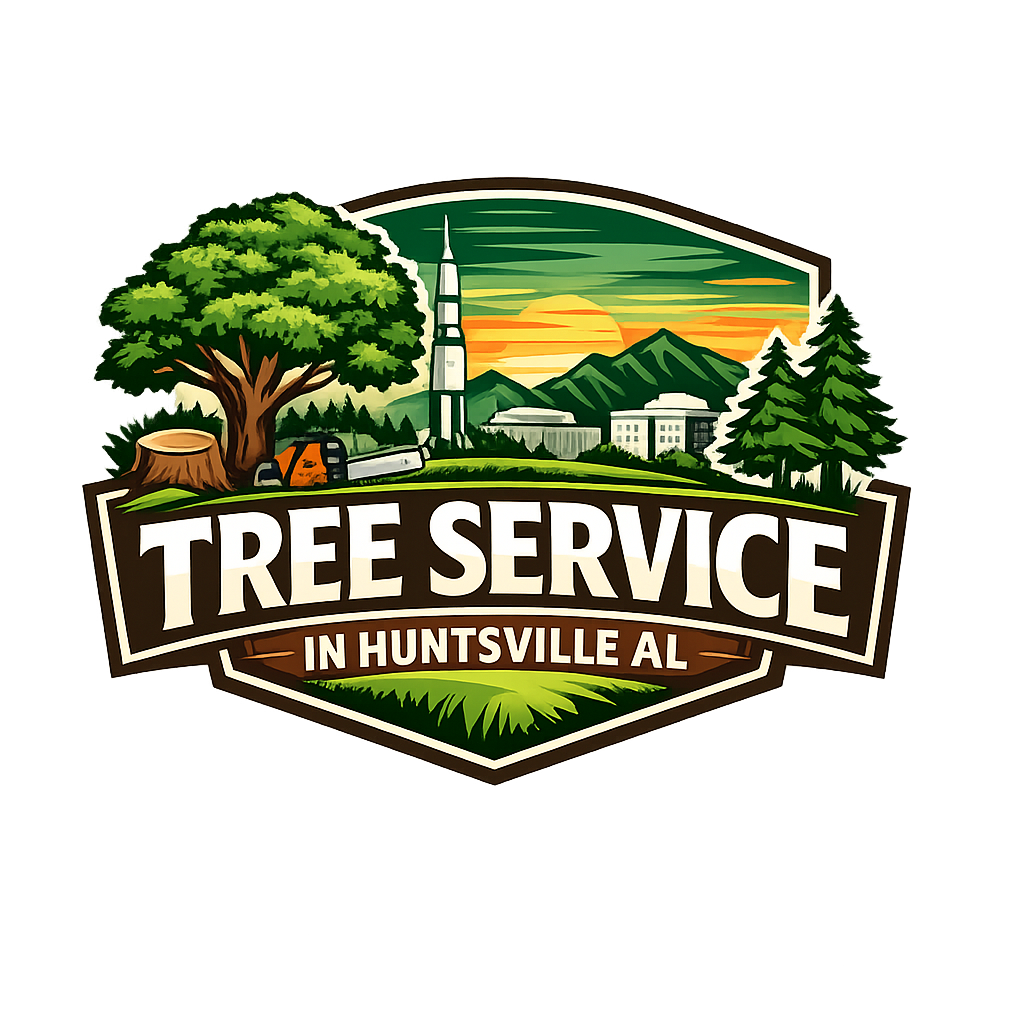
Tree health inspection helps property owners spot problems before trees become dangerous or unhealthy. In Huntsville, trees deal with heavy rain, strong storms, summer heat, and changing soil conditions throughout the year. Many homeowners in Alabama have large trees close to homes, fences, driveways, and power lines. When a tree becomes weak or diseased, the damage can happen quickly during bad weather.
A tree may look healthy on the outside while problems grow inside the trunk or roots. Small cracks, dead limbs, insect activity, or leaning can all point to larger issues below the surface. Regular inspections help homeowners catch these warning signs early and avoid costly damage later.
Tree Health Inspection in Huntsville AL is often needed after storms or long periods of wet weather. Heavy rain can weaken root systems, especially in areas with soft or clay-heavy soil. Strong winds may damage branches that already have decay inside them. In some cases, a tree slowly becomes unstable without obvious signs from the ground.
A proper inspection looks at the full condition of the tree. This includes the trunk, roots, bark, limbs, canopy, and surrounding soil. Arborists often check for signs of disease, storm stress, insect damage, and root problems that could affect tree stability.
Many homeowners call for an inspection after noticing dead branches or sudden leaning. Others schedule inspections before storm season begins. Large trees near homes or parked vehicles should always be monitored because even healthy-looking trees can fail during severe weather.
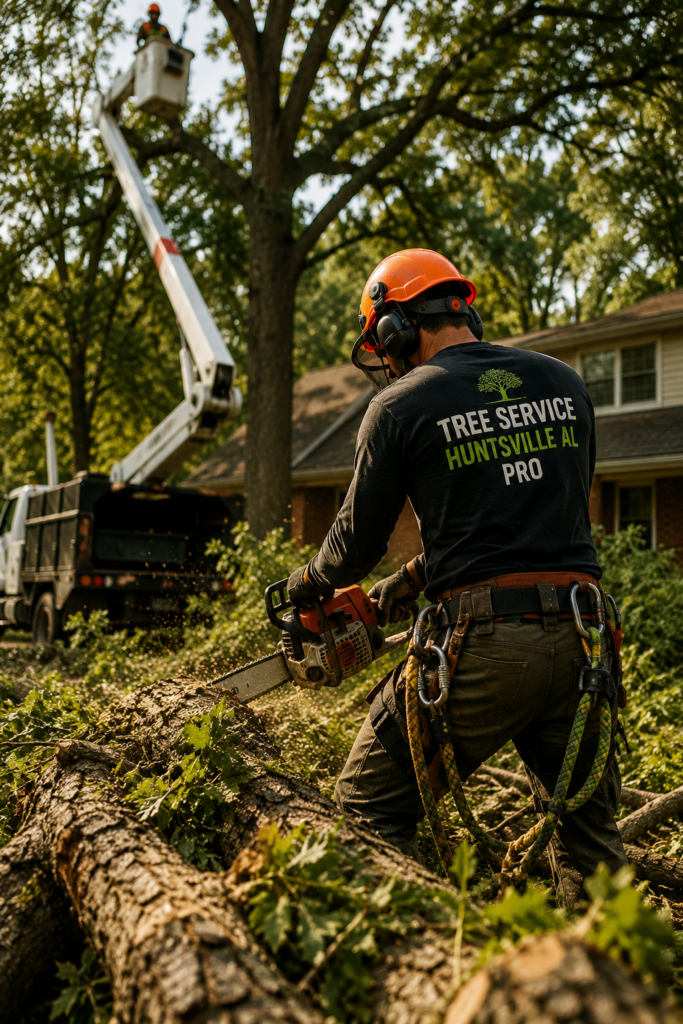
Trees usually give warning signs before major failure happens. Some problems develop slowly over several years, while others appear quickly after storms or lightning strikes. Property owners in Alabama should watch for changes in the tree’s appearance or growth pattern.
Some of the most common warning signs include:
* Dead or hanging branches
* Mushrooms near the roots
* Cracks in the trunk
* Missing bark
* Hollow sections in the tree
* Leaning after heavy rain
* Sudden leaf loss during growing season
Fungal growth is common in warm Alabama weather and may point to internal decay. Trees with root rot often become unstable because the roots can no longer hold the tree firmly in place. This becomes dangerous during Huntsville thunderstorms and high winds.
Pine beetles are another issue seen across North Alabama. These insects attack weakened pine trees and may spread quickly to nearby trees. A health inspection can help identify insect activity before major damage spreads across the property.
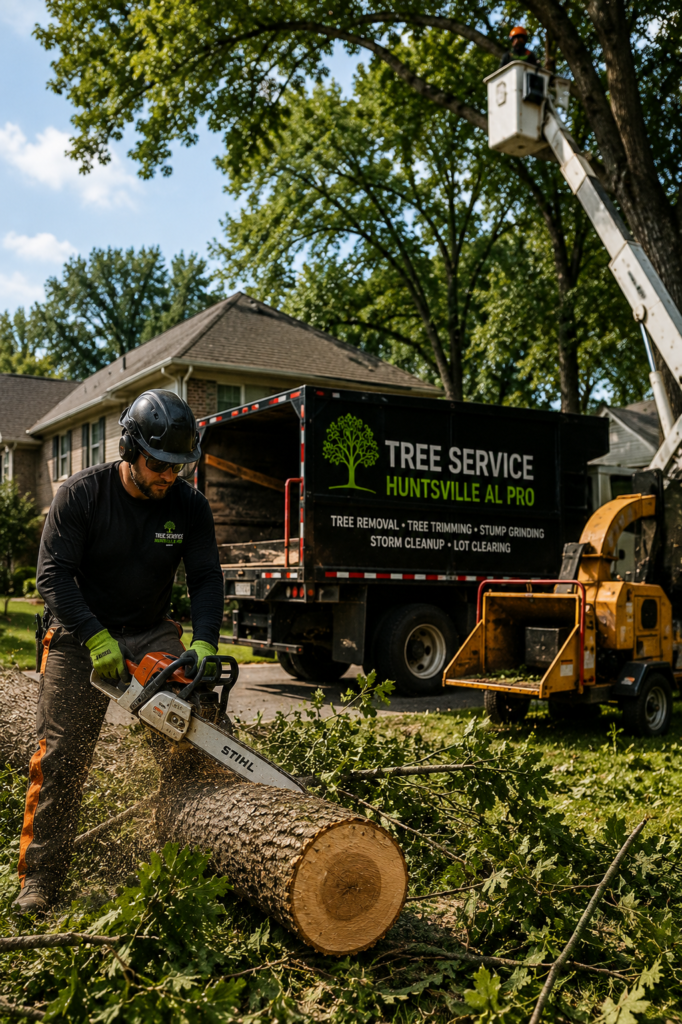
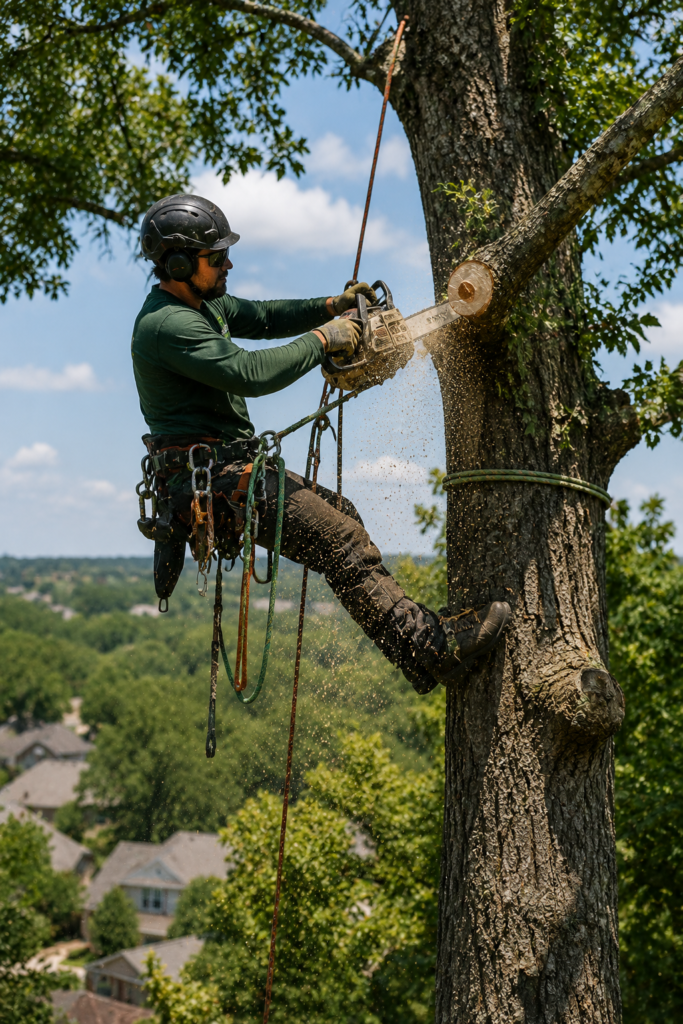
Many tree problems are easier to manage when caught early. A weak branch may only need pruning, while a diseased tree may require treatment before the damage spreads further. Waiting too long often leads to emergency tree removal after a storm.
Tree roots are especially important during inspections. Roots anchor the tree and help absorb water and nutrients. Construction work, trench digging, and compacted soil can slowly damage roots without the homeowner realizing it. Over time, weakened roots increase the chance of the tree falling.
Regular inspections also help homeowners protect nearby structures. Trees growing too close to roofs, garages, or power lines may need trimming to prevent damage. Falling limbs are one of the most common causes of roof and fence damage during storms in Huntsville.
Lightning strikes are another concern in Alabama because of strong spring and summer storms. A tree struck by lightning may split immediately or slowly weaken over time. Internal cracks caused by lightning are not always visible from the ground, which makes professional inspections helpful after severe weather.
Every season brings different tree problems in Huntsville. Spring storms often lead to broken limbs, cracked trunks, and leaning trees. Summer heat places stress on older trees, especially during dry periods with little rainfall. Trees weakened by drought are more likely to suffer insect damage or disease.
Fall is often one of the best times for inspections because thinning leaves make structural problems easier to see. Dead limbs and uneven growth patterns become more visible once leaves begin dropping. Winter ice storms can also create problems by adding extra weight to weak branches.
Seasonal inspections help property owners prepare for changing weather conditions in Alabama. Catching a problem early is usually safer and less expensive than waiting until a tree falls during a storm.
Tree Health Inspection is about more than checking for dead limbs. It helps homeowners protect their property, improve tree safety, and prevent long-term damage caused by disease, insects, and severe weather. In Huntsville, regular tree inspections are a smart way to care for mature trees and keep outdoor spaces safer throughout the year.