- (256) 804 0425
- info@treeservicehuntsvillealpro.com
- Mon - Sat: 9:00 - 19:00
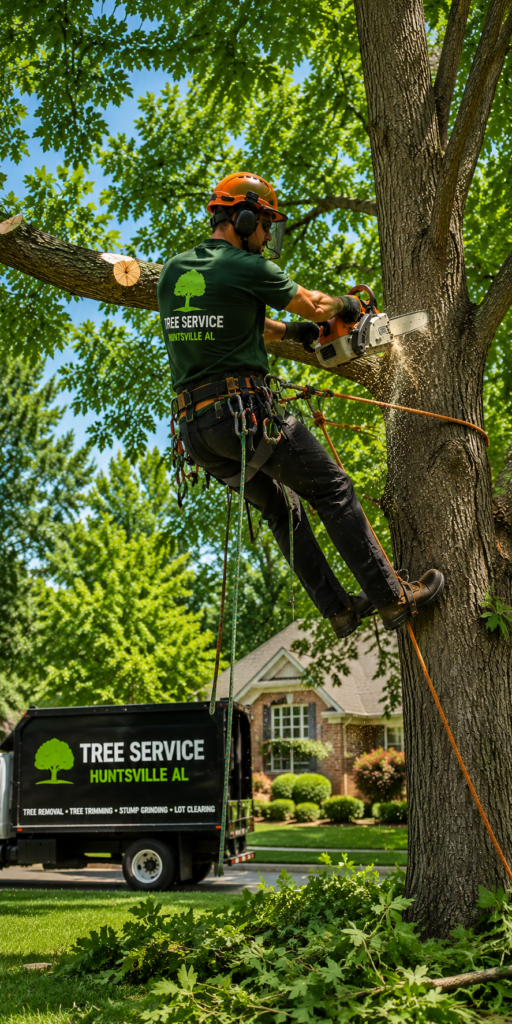
Dead Tree Removal helps protect homes, driveways, and power lines from sudden tree failure. In Huntsville, dead trees often become dangerous after strong storms, long dry periods, or heavy rain that weakens the roots. Many homeowners do not notice a tree is dying until large branches start falling or the trunk begins to lean. Fast action can help prevent costly property damage and safety risks. If other trees on your property need attention, our local tree services cover routine care as well. Read how to tell if a tree is dead or just dormant.
Older neighborhoods across Huntsville have many mature trees. While they add shade and beauty, dead or weakened trees can quickly become unstable during Alabama storm season. Oak, pine, maple, and cedar trees are common in the area, and each type reacts differently to weather stress, insects, and disease. A dead pine may dry out and crack, while an older oak can slowly rot from the inside.
Storms are one of the biggest reasons people need tree removal in Alabama. High winds and soaked soil can push a dead tree over without warning. Even smaller dead limbs can fall onto roofs, cars, fences, or sidewalks. This becomes more common during spring thunderstorm season and late summer heavy rains.
Many property owners first notice warning signs after a storm passes. A tree may suddenly lean, lose bark, or drop large branches. Mushrooms growing near the trunk can also point to root decay underground. These problems should never be ignored because dead trees become weaker over time.
Dead Tree Removal in Huntsville AL is also common after lightning strikes. Lightning can split a trunk or damage the inside of the tree where homeowners cannot easily see the problem. In some cases, the tree survives for a short time before slowly dying months later. See how long a dead tree can stand before it becomes dangerous. Find out whether dead trees attract termites and pests.
Homeowners often ask how to tell if a tree is dead or simply stressed. A few clear warning signs can help:
* Large sections without leaves during growing season
* Deep cracks in the trunk
* Falling bark or hollow areas
* Dead branches in the upper canopy
* Leaning after storms
* Fungal growth near roots
If several of these signs appear together, the tree may no longer be stable. Trees near homes, garages, or streets create the highest risk. Even a medium-sized tree can cause major structural damage if it falls the wrong way.
Some trees die slowly from insect problems. Termites, beetles, and fungal diseases are common in Alabama because of the warm climate and humidity. Root rot is another issue seen after long periods of wet weather. Once roots weaken, the tree may not stay anchored in the ground. Learn why removing a dead tree is harder than removing a healthy one.
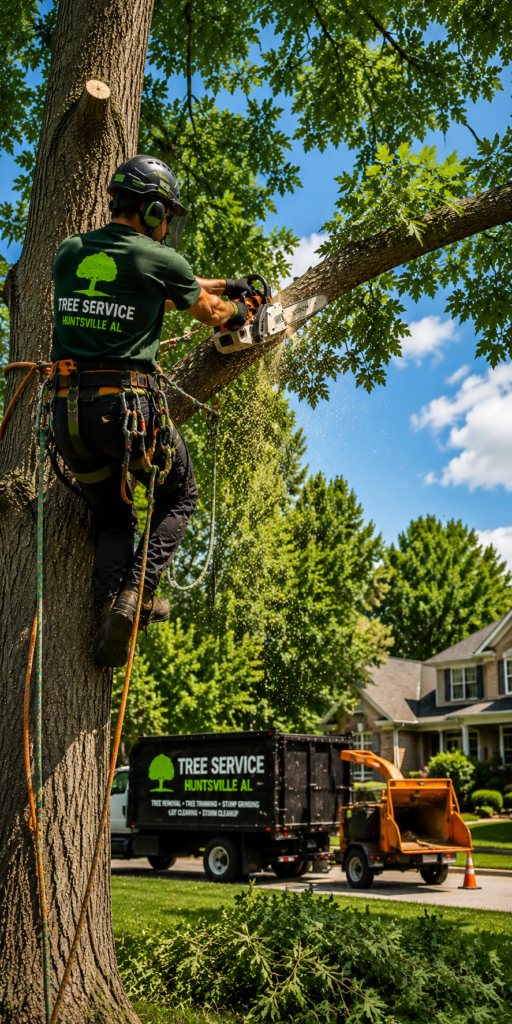
Removing a dead tree is dangerous work. Dead wood becomes brittle and unpredictable. Limbs can snap during cutting, especially when the tree has internal decay. Trees near utility lines or rooftops require extra planning and specialized equipment.
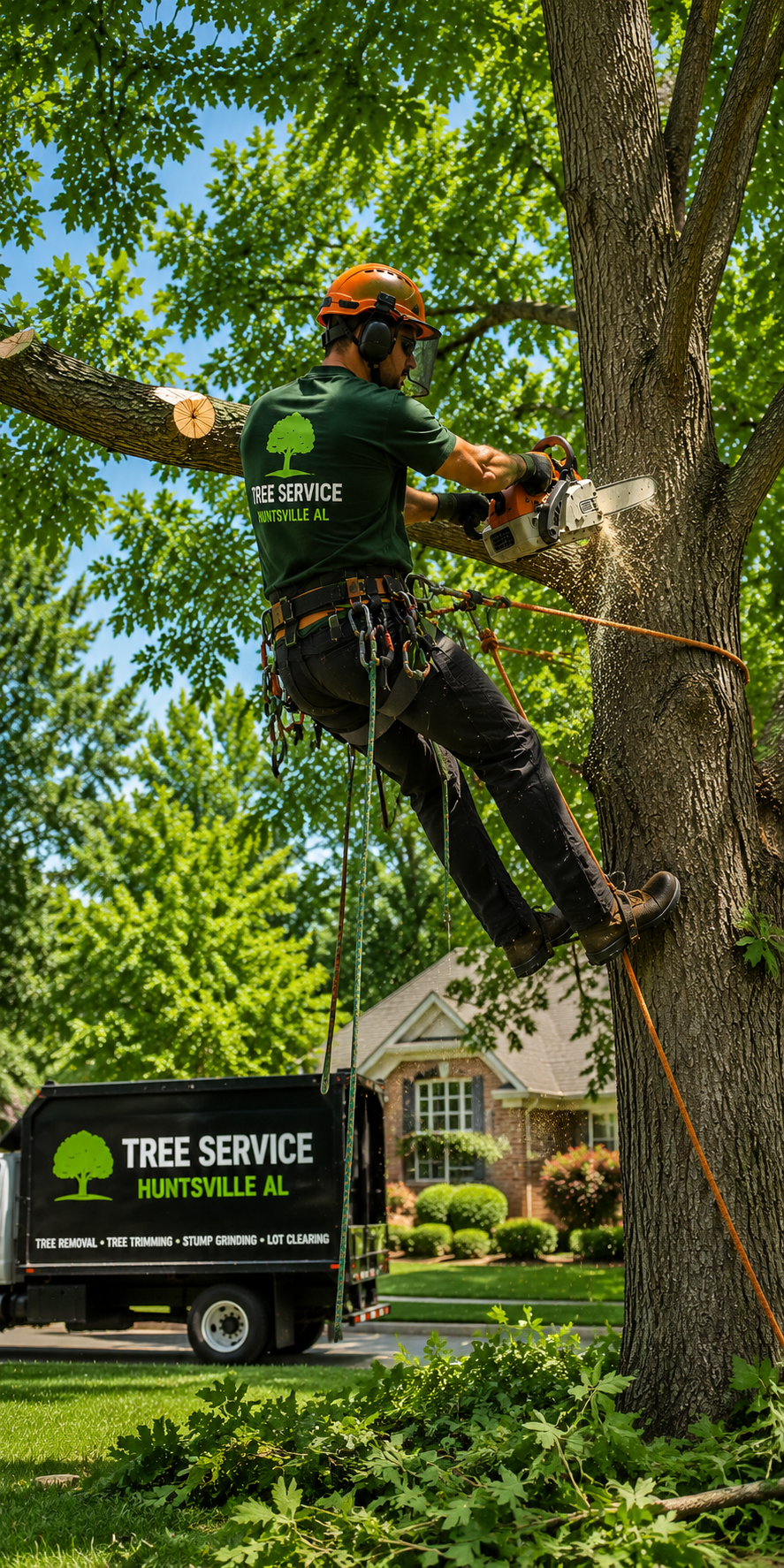
Professional crews usually inspect the tree first to identify weak spots, lean direction, and nearby hazards. They may use climbing gear, cranes, ropes, or bucket trucks depending on the size and location. Safety matters more when the ground is wet after storms because heavy equipment can shift in muddy soil. After removal, see what to do next and whether you need stump removal.
Many homeowners in Huntsville also ask about stump removal. Leaving a dead stump behind may attract insects or create mowing problems. Grinding the stump can improve safety and make the yard easier to maintain.
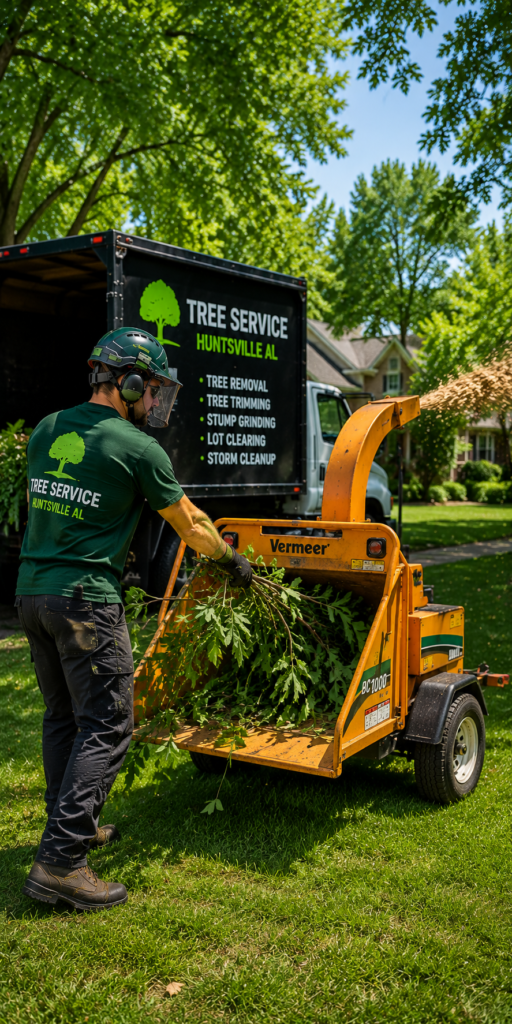
Weather patterns in Huntsville create several tree-related problems throughout the year. Spring storms bring strong winds and lightning that damage weak trees. Summer heat can stress older trees that already struggle with disease or poor roots. During fall, dead limbs become easier to spot once leaves drop.
Winter ice storms also create trouble in northern Alabama. Ice adds extra weight to dead limbs and weak trunks. Even healthy trees can break during freezing weather, but dead trees have a much higher chance of collapse.
Clay-heavy soil in parts of Huntsville can also affect tree stability. After long rain periods, the soil may loosen around shallow roots. This is one reason leaning trees should always be inspected quickly after storms.
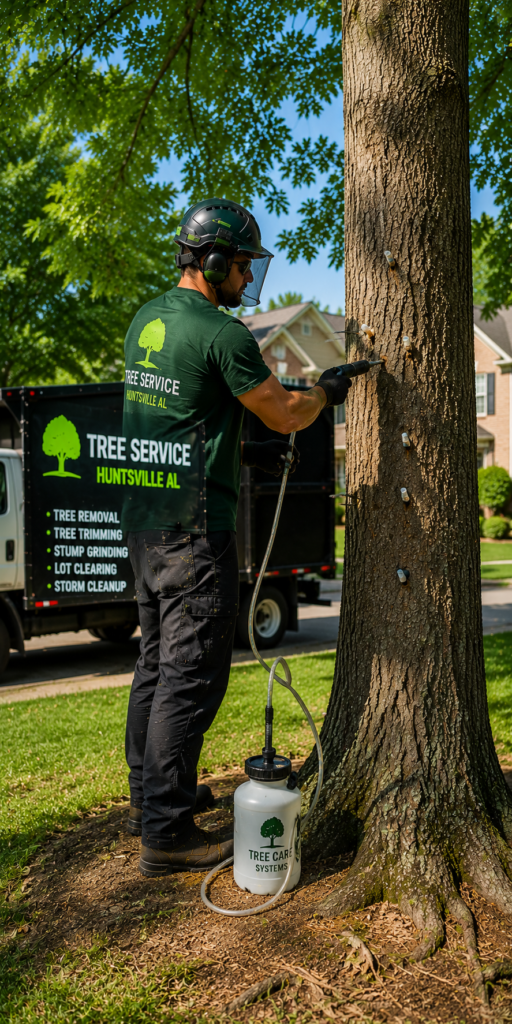
Property owners can take a few simple steps before scheduling removal work. Keep children and vehicles away from unstable trees. Avoid placing lawn equipment near damaged roots or hanging branches. If a tree is close to power lines, contact the utility company immediately instead of trying to handle the problem alone.
Photographs can also help document storm damage for insurance claims. Many insurance companies request pictures before cleanup starts. Homeowners should also watch nearby trees for signs of disease because problems sometimes spread between trees growing close together.
Dead Tree Removal is not only about cutting down trees. It is also about protecting homes, keeping yards safe, and preventing future damage. In Huntsville, changing weather and heavy storms make regular tree inspections a smart part of property care.